The weather in the Basque Country and Northern Spain is different than the rest of Spain.
The typical weather a tourists thinks of when they travel to Spain is dry and sunny, and it is true, but not in the north. On the Cantabrian coast the weather is cooler and rainy due to the Atlantic sea that bathes the northern coast of Spain. In these latitudes the Atlantic Sea is a cold sea so its influence is felt in the summer. On the other hand, in the winter the sea does not get as cold as the atmosphere thats why we also have winters with mild temperatures. Rain is never absent so if you come to the Basque Country you will see that everywhere you look everything is green.
So, while in the rest of Spain in summer it can be 100 degrees F, in the north we are at about 80 degrees F.
In the north of Spain the climate is Atlantic while in the rest of Spain it is a more continental Mediterranean climate. In other words, if a tourist wants to avoid the heat during the summer months the Basque Country and the north in general is the best option.
In addition to a perfect temperature we have beautiful beaches, mountains and villages to visit. Of course, the famous Basque gastronomy is always a great attraction.
https://sansebastiantrips.com/wp-content/uploads/3B2016BD-B134-427C-9BE4-8E275AE9EB4E.jpeg8131440Alex Luquehttps://sansebastiantrips.com/wp-content/uploads/2016/12/san-sebastian-trips-logo.pngAlex Luque2023-08-03 15:05:512024-02-22 22:34:22Weather in the Basque Country
Hello everyone! I want to tell you about Ernest Hemingway. Surely many of you have read some of his masterpieces, such as “The sun also rises”, “For Whom the Bell Tolls” or “The Old Man and the Sea”. But did you know that Hemingway had a very special relationship with Spain? Yes, friends, this genius of letters fell in love with our country and visited it on several occasions, leaving his mark in places like Pamplona, Madrid, Burguete or San Sebastian. In this post I am going to tell you a little more about Hemingway’s life and work in Spain, and I invite you to follow his footsteps through the north of our geography. Are you in?
Hemingway came to Spain for the first time in 1923, when he was a young journalist in search of adventure and excitement. He was attracted by Spanish culture, especially bullfighting and popular festivals. That is how he came to know the Sanfermines of Pamplona, a celebration that captivated him and that he captured in his novel “The sun also rises”, published in 1926. In this work, Hemingway narrates the adventures of a group of foreign friends who travel to Pamplona to enjoy the running of the bulls, the bullfights and the festive atmosphere. The novel was a success and turned Pamplona into an international tourist destination. Today, you can follow Hemingway’s route through the city, visiting places such as the Café Iruña, the Hotel La Perla or the Plaza de Toros.
But Hemingway did not only stay in Pamplona. He also explored other areas of northern Spain, such as Navarra, La Rioja or the Basque Country.He liked to fish for trout in the Pyrenean rivers, taste the local gastronomy and stay in charming rural houses. One of his favorite places was Burguete, a village in Navarre where he stayed several times at the Hotel Burguete. There he wrote part of his novel “The sun also rises”. Another obligatory stop was San Sebastian, the elegant coastal city where Hemingway enjoyed the sea, the beach and the pintxos. It is said that he used to frequent the bar La Cepa, the restaurant Casa Nicolasa or the Hotel María Cristina.
Hemingway returned to Spain in 1936, but this time with a very different motive: to cover the Civil War as a correspondent. He settled in Madrid, at the Hotel Florida, and from there he sent his chronicles of the conflict. He also actively participated in the Republican cause, supporting the international brigadists and collaborating with filmmaker Joris Ivens in the documentary “Land of Spain”. His war experience inspired him to write another of his great novels: “For Whom the Bell Tolls”, published in 1940. In this work, Hemingway tells the story of an American soldier fighting against the fascists in the mountains of Segovia.
After the war, Hemingway returned to Spain several more times, always faithful to his passion for bullfighting and fiestas.
Ernest Hemingway San Sebastian
Hemingway in Spain: One of Hemingway’s favorite destinations in Spain was Hemingway San Sebastian, a coastal city in the Basque Country known for its picturesque beaches and delicious pintxos.
One of the iconic locations associated with Hemingway in Spain is Pamplona, where he attended the famous San Fermín festival. Hemingway’s experiences in Pamplona inspired his novel “The Sun Also Rises,” capturing the essence of the bullfighting culture and the lively atmosphere of the festival.
Madrid was another significant city in Hemingway’s Spanish adventures. He frequented the literary and social scenes of the Spanish capital, immersing himself in the vibrant culture of cafes, bullfights, and flamenco music. Hemingway’s time in Madrid influenced his writing and deepened his connection to Spain.
Hemingway spain locations
One of the iconic locations associated with Hemingway in Spain is Pamplona, where he attended the famous San Fermín festival. Hemingway’s experiences in Pamplona inspired his novel “The Sun Also Rises,” capturing the essence of the bullfighting culture and the lively atmosphere of the festival.
Madrid was another significant city in Hemingway’s Spanish adventures. He frequented the literary and social scenes of the Spanish capital, immersing himself in the vibrant culture of cafes, bullfights, and flamenco music. Hemingway’s time in Madrid influenced his writing and deepened his connection to Spain.
In the picturesque town of Ronda, Hemingway found inspiration for his novel “For Whom the Bell Tolls.” The dramatic landscapes of Ronda, with its deep gorge and historic bullring, captivated Hemingway’s imagination and provided the backdrop for the intense story of love and war set during the Spanish Civil War.
Barcelona also played a role in Hemingway’s Spanish journey. He explored the vibrant streets of the city, soaking in the artistic and bohemian atmosphere that inspired many of his works. Hemingway’s experiences in Barcelona added another layer of richness to his portrayal of Spain in his writing.
Seville, with its romantic architecture and passionate flamenco performances, left a lasting impression on Hemingway. The city’s timeless beauty and cultural richness influenced his writing, especially in works like “Death in the Afternoon,” where he delved into the world of bullfighting and the essence of Spanish traditions.
https://sansebastiantrips.com/wp-content/uploads/Hemingway.jpg335660Alex Luquehttps://sansebastiantrips.com/wp-content/uploads/2016/12/san-sebastian-trips-logo.pngAlex Luque2023-06-02 09:15:282024-04-03 10:07:36Hemingway in Spain
Today I want to talk to you about the San Fermin festival, one of the most popular and fun celebrations in the world. Do you know what they consist of and why they are held? Well, keep reading, I’m going to tell you all about it.
When does the festival of san fermin take place?
The festivities of San Fermin are held every year from July 6th to 14th in Pamplona, the capital of Navarra in Spain. They are in honor of San Fermin of Amiens, the first bishop of the city and co-patron of the region. According to tradition, Saint Fermin baptized thousands of people in the 3rd century and died a martyr in France.
But what makes these festivities famous is not only their religious aspect, but also their festive and multicultural atmosphere. For nine days, Pamplona is filled with people from all over the world who come to enjoy the music, the gastronomy, the fireworks and, above all, the running of the bulls.
The running of the bulls is the most emblematic and exciting event of the Sanfermines. They consist of a race of about 850 meters through the streets of the old town, in which participants run in front of six brave bulls and six steers that guide them to the bullring. The running of the bulls takes place every day at eight o’clock in the morning, from July 7 to 14, and lasts between two and four minutes.
The running of the bulls in San Fermin
The running of the bulls is a very old tradition that dates back to the 14th century, when the shepherds had to drive the cattle to the bullring for the bullfights. Over time, some young men were encouraged to run in front of the animals to demonstrate their bravery and skill. Thus was born this unique spectacle that has inspired writers like Ernest Hemingway, who described it in his novel “The Sun Also rises”.
But not everyone can or wants to run the running of the bulls. It must be taken into account that it is a very dangerous activity that requires a good physical and mental shape. In addition, you have to respect some rules and some chants that are made before each race to ask for protection to the saint. For this reason, many people prefer to watch the running of the bulls from their balconies or on television.
But beyond the bulls, there are many other activities that can be done during the Sanfermines. For example, you can attend the procession on July 7th, in which the image of San Fermin is carried through the streets; you can enjoy the giants and big-heads, papier-mâché figures representing different races and continents; you can dance to the rhythm of the charangas and the peñas, musical groups that liven up the festival; or you can taste the rich Navarrese gastronomy, with typical dishes such as chistorra, ajoarriero or cuajada.
The most important thing to experience the Sanfermines is to wear the typical costume: white T-shirt and pants, with a red scarf and a red sash. The scarf is worn around the neck after the chupinazo, the rocket that starts the festivities on July 6 at 12 noon from the balcony of the town hall. The handkerchief is removed with el pobre de mí, a song that is sung on the night of July 14 to bid farewell to the fiestas.
I recommend everyone to experience the fiestas of San Fermin at least once in a lifetime.
Pamplona festival
The San Fermín festival in Pamplona is a traditional Spanish event celebrated in honor of San Fermín, the patron saint of Navarre.
One of the main highlights of the festival is the famous running of the bulls, where participants run through the streets of Pamplona alongside these powerful animals.
Thousands of people from all over the world gather in Pamplona to take part in this thrilling event, which has gained international recognition over the years.
The festival also includes traditional music, dances, and bullfights, creating a vibrant and lively atmosphere in the city.
Visitors can immerse themselves in the cultural richness of Pamplona during the festival, enjoying local cuisine, art, and traditions.
https://sansebastiantrips.com/wp-content/uploads/2016/12/san-sebastian-trips-logo.png00Alex Luquehttps://sansebastiantrips.com/wp-content/uploads/2016/12/san-sebastian-trips-logo.pngAlex Luque2023-05-22 21:47:482025-11-25 09:18:59San Fermín festival in Pamplona
As we have said many times, la rioja is not only wine, it also has great attractions such as its rich heritage and nature. This time we did a very nice tour around the area of Haro and Briñas. We were able to taste some of the best wines in the area and eat a fantastic lamb. Also, we had time to visit the wonderful little villages, their churches, streets and fountains. Everything was beautiful around us. It is undoubtedly a special place in Rioja, especially if you visit the non-touristy areas as you can see in this little clip.
We look forward to showing our clients these interesting places because we enjoy our culture and heritage as much as our clients do.
We would like to invite you to discover for yourselves so much beauty and of course enjoy the wine and the gastronomy.
https://sansebastiantrips.com/wp-content/uploads/IMG_0367.jpeg14401440Alex Luquehttps://sansebastiantrips.com/wp-content/uploads/2016/12/san-sebastian-trips-logo.pngAlex Luque2022-05-24 11:48:082024-02-22 21:25:36Rioja for wine and heritage lovers
Sold for 1600€ to Rekondo restaurant in San Sebastian
This first specimen (lehenbiziko in Basque language) was caught in the Bidasoa river by a local fisherman and was bought as is tradition by the Rekondo restaurant in San Sebastian. The specimen weighed 4.4 kg and was caught by spoon at the Endarlatsa dam.
The Atlantic salmon fishing in the Basque Country is very restrictive and several permits are needed to fish. Salmon specie is in a recovery phase in our rivers, so its fishing is very limited. In the past, salmon fishing was a very important resource for the people in the Basque Country and northern Spain, but overfishing, river pollution and hydraulic dams made it disappear. Decades ago the government developed a very ambitious plan for its recovery.
Today the rivers are very clean thanks to the water purification plants, and the old dams that prevented the salmon from going up the rivers have been destroyed. Fishing quotations are very controlled and only 5% of the total number of fish returning from the sea for spawning are allowed to be caught. In my opinion, there is still a lot to be done to enjoy fishing in our rivers. We lack more ecological policies that educate the river populations on how to take care of the environment in order to enjoy it to the full. Still, unfortunately, it is normal to see children throwing plastic on the ground or plastic waste from an industrial park thrown all over the river bank. This makes my blood boil and these are very important issues that should be addressed.
On the other hand, we have to be happy about the current situation of our rivers. It is a situation with room for improvement but today it is very satisfactory for sport fishermen. Numerous catches of brown trout and sea trout can be made. The capture of salmon is always more complicated due to the limited number of specimens and their feeding habits.
The policy for trout and sea trout is catch and release, for salmon a special permit is needed and there is a limitation on the number of catches with death.
We will continue to fight to improve the quality of our rivers for us and for future generations and in my opinion education is a determining factor in this conservation process.
https://sansebastiantrips.com/wp-content/uploads/IMG_20210502_162824-1-scaled.jpg25601920Alex Luquehttps://sansebastiantrips.com/wp-content/uploads/2016/12/san-sebastian-trips-logo.pngAlex Luque2022-05-03 10:35:052024-02-22 22:39:11First salmon of the season
Pottoka is a breed from the Basque Country. It is a slender and strong animal. Very well adapted to the environment of Euskal Herria and at the same time reinforced and molded as a result of this special environment. Inhabiting our mountains and valleys since the Paleolithic Era (40,000 B.C.). The beautiful images of the Ekain and Santimamiñe caves bear witness to this. Until now it has been a loyal and hard-working helper in day-to-day life and development. The pottoka has long played an important role in the tradition and myths of Euskal Herria. All this and the breed’s own personality and antiquity make the pottoka special.
Although the word pottoka in Basque is used to refer to any breed of animal, it began to be used to refer to the offspring of horses and has finally become attached to this special breed.
Some drawings and images of Euskal Herria (Ekain, Etxeberri, Santimamiñe…) have as main subject the horse’s head, favorite prey of the hunters of the Madgalenian age, and the pottoka also appears in several drawings made on bones. These data make us think that the pottoka has lived in the mountains of Euskal Herria since the Paleolithic Age. Therefore, they may be the testimony of the horses of prehistoric times, a breed that has lasted until today and has special zootechnical characteristics.
The Pottoka has had various uses throughout history. It is a well-built animal, with medium and proportionate measurements and a strong muscular body. In character, on the other hand, they are fast, faithful and very resistant. For all these characteristics it has been used for various functions: riding, hunting and wars, cart pulling and agricultural work, pulling mining wagons, grain sowing, for meat (crossed with burguete horses), foreign exports (Indian army) and lately, apart from being used to keep the meadows and mountains clean, it can be seen in various riding activities.
Despite being an extraordinary animal for the above mentioned activities, today it is an endangered animal. Nowadays it has been marginalized to the mountains and useless corners for several reasons: modernity, mechanization of agricultural works, private ownership of mountains and lands and their productive utility, the breed itself and the lack of market for its products.
It is a social horse used to living in a group. The group normally consists of 10-15 females and their respective males. The relationships between the two are very special and in early spring and summer are reinforced. Each group usually lives in its own territory. Traditions are renewed from generation to generation, the topography, the microclimate and the knowledge about the plants are transmitted from one to another.
https://sansebastiantrips.com/wp-content/uploads/IMG_1758-scaled.jpg15362048Alex Luquehttps://sansebastiantrips.com/wp-content/uploads/2016/12/san-sebastian-trips-logo.pngAlex Luque2022-03-22 10:18:142024-02-22 22:34:43Pottok, the basque horse
There are 3 types of Basque cheeses on both sides of the Pyrenees that are made from raw sheep’s milk.
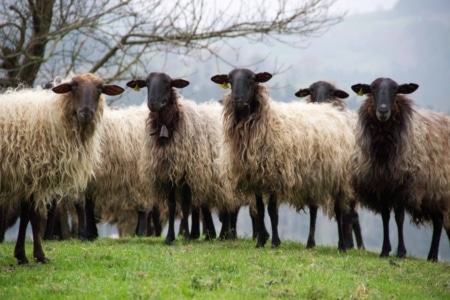
On the Spanish Basque side we have the Idiazabal and Roncal cheeses. In both cases these cheeses obtain their milk from the Latxa sheep, a species of sheep from the Basque Country from which a very tasty milk is obtained largely due to the greenery of the pastures on which it feeds. The milk obtained is always used unpasteurized for the production of these cheeses.
On the French Basque side we have the Irati-Ossau cheese. In this case the sheep that produce this cheese are of the Manech and Béarnese Basque type. They feed in the summer in high altitude pastures in the Pyrenees. In order to obtain the denomination of origin, this cheese can only be produced in spring and summer to guarantee the maximum quality of the product.
Basque cheese
Below we will describe the characteristics of each of the cheeses:
Irati-Ossau
The name comes from the area where it comes from, which is the Ossau Valley and the Irati Forest, the largest beech forest in Europe. As mentioned above, the sheep used in the production of this cheese are of the Manech and Vasco Bearnesa types. Its area of distribution is centered in the Pyrenees on the French side. These are areas ranging between 500 and 1500 meters above sea level. The cheese can only be made with milk from spring and summer. The cheese weighs between 3 and 5kg.
Idiazabal
It is a denomination of origin from the Basque Country and Navarra. The milk from Latxa and Carranzana sheep is used for the production of these cheeses. These cheeses weigh between 1 and 3kg.
There are two varieties of this cheese, it can be cured or cured and smoked. For me, the most delicious is the normal one, but there is nothing written about tastes.
Roncal
The Roncal Valley is located in Navarra, in the Pyrenean area from the border with France to the Bardenas Reales. In the summer the Latxas sheep feed on the high mountain pastures in areas up to 2000m altitude. Then in the winter they go south to feed. This has been the case since the time of King Sancho Garcia in the 9th century.
San Sebastian is known worldwide for its gastronomy and its beaches but it is also important to highlight its cultural and artistic offer.
In this case we want to focus on the artistic offer of the region of San Sebastian.
In the city are scattered different works of Basque artists such as Eduardo Chillida, Jorge Oteiza or Cristina Iglesias.
In this short article I want to highlight only the most important things to visit.
The Comb of the Winds
One of the most outstanding works of art is undoubtedly “The Comb of the Winds” by Eduardo Chillida, one could say that it is one of the symbols of the city. It is located at the end of the bay of La Concha on the rocks. It is an idyllic place where tourists can enjoy the scenery and capture some beautiful photos by the sea.
Chillida Leku
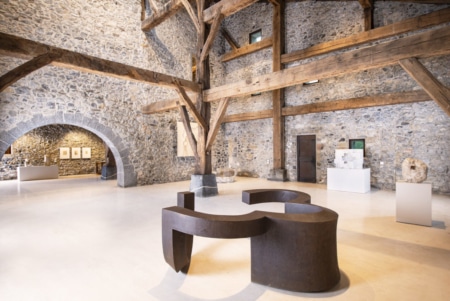
Eduardo Chillida is a universal Basque artist who has a museum dedicated to his work on the outskirts of the city. The museum is located in a 15th century Basque-style country house with large gardens where the art pieces are scattered. Eduardo Chillida worked with different materials such as iron, wood and stone. It is a place worth a visit.
The lighthouse of Santa Clara Island in San Sebastian
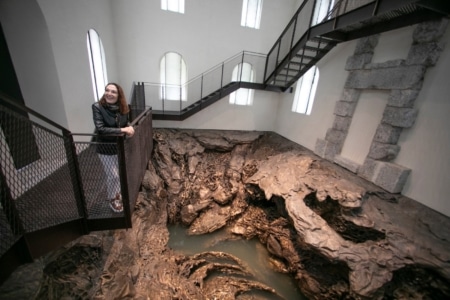
On the island of Santa Clara in the bay of La Concha in San Sebastian was recently inaugurated the work of the Basque artist Cristina Iglesias. It is located inside an old lighthouse and is made of bronze. It is a representation of the seabed and specifically is a representation of the unique Basque coastal landscape. It has very curious and capricious forms as if sculpted by the water and the wind. It is undoubtedly the masterpiece of Cristina Iglesias. To access it is necessary to obtain tickets through tourism in San Sebastian as the capacity is very limited so hurry up and get your tickets.
In short, the artistic offer of san sebastian is exciting and worth a visit.
https://sansebastiantrips.com/wp-content/uploads/2016/11/IMG_8872-scaled.jpeg15362048Alex Luquehttps://sansebastiantrips.com/wp-content/uploads/2016/12/san-sebastian-trips-logo.pngAlex Luque2022-01-04 18:46:532024-02-22 22:36:30San Sebastian a piece of art
It was a mid-July day in the Basque mountains. The summer has been very rainy this year 2021 so the river was flowing beautifully with plenty of water.
This day I was guiding my guest and friend Bill from California. In a shallow area of fast flowing, oxygenated water the big trout awaited us.
A few minutes before Bill had lost another big trout in a previous rapid but after a while of fighting the trout escaped. So we were in a good area and the trouts were very active. I was wearing shorts at the time and didn’t have my waders on. On the third cast with the nymph the trout took it! The fight was on! She climbed up the pool, went under the rocks, jumped, got into the currents, but after all these maneuvers I managed to stop the fish. After those heart-stopping moments the fish relaxed a bit and all I had to do was wait for the right moment to net it. The fight lasted about 10 minutes but I didn’t want to show it all in the video. It was one of the fights of my fly fishing life, an unforgettable moment.
https://sansebastiantrips.com/wp-content/uploads/IMG_9487-scaled.jpeg25601920Alex Luquehttps://sansebastiantrips.com/wp-content/uploads/2016/12/san-sebastian-trips-logo.pngAlex Luque2021-09-17 09:43:302024-02-22 22:39:19The biggest trout of the season
I always say that in La Rioja there are more things than wineries and wine. It is a land with an impressive historical and natural heritage.
In this case our client wanted to make a recording playing her instrument. For this she needed a special place with good acoustics and that was unique for its beauty. It occurred to me that a small gothic-renaissance style church would suit her. The chosen church was Santa María la Mayor in San Vicente de Sonsierra. It is a unique church because of its rich interior and its location. It is situated on top of a hill overlooking the Ebro river from where you can see the whole valley of La Rioja.
We contacted the person in charge of the church and asked to reserve it for us for a while.
After seeing the final result I can’t think of a better place for this purpose. Of course the client was delighted with the place and its acoustics. It exceeded all her expectations.
After visiting a number of other places of interest we stopped for lunch at a typical restaurant in the area.
https://sansebastiantrips.com/wp-content/uploads/2016/12/rioja-wine-spain2.jpg450450Alex Luquehttps://sansebastiantrips.com/wp-content/uploads/2016/12/san-sebastian-trips-logo.pngAlex Luque2021-07-02 08:33:302024-02-22 22:38:45The time we went to Rioja and not to drink wine!
We may request cookies to be set on your device. We use cookies to let us know when you visit our websites, how you interact with us, to enrich your user experience, and to customize your relationship with our website.
Click on the different category headings to find out more. You can also change some of your preferences. Note that blocking some types of cookies may impact your experience on our websites and the services we are able to offer.
Essential Website Cookies
These cookies are strictly necessary to provide you with services available through our website and to use some of its features.
Because these cookies are strictly necessary to deliver the website, refusing them will have impact how our site functions. You always can block or delete cookies by changing your browser settings and force blocking all cookies on this website. But this will always prompt you to accept/refuse cookies when revisiting our site.
We fully respect if you want to refuse cookies but to avoid asking you again and again kindly allow us to store a cookie for that. You are free to opt out any time or opt in for other cookies to get a better experience. If you refuse cookies we will remove all set cookies in our domain.
We provide you with a list of stored cookies on your computer in our domain so you can check what we stored. Due to security reasons we are not able to show or modify cookies from other domains. You can check these in your browser security settings.
Other external services
We also use different external services like Google Webfonts, Google Maps, and external Video providers. Since these providers may collect personal data like your IP address we allow you to block them here. Please be aware that this might heavily reduce the functionality and appearance of our site. Changes will take effect once you reload the page.